Yoga Beyond the Yoga Pants
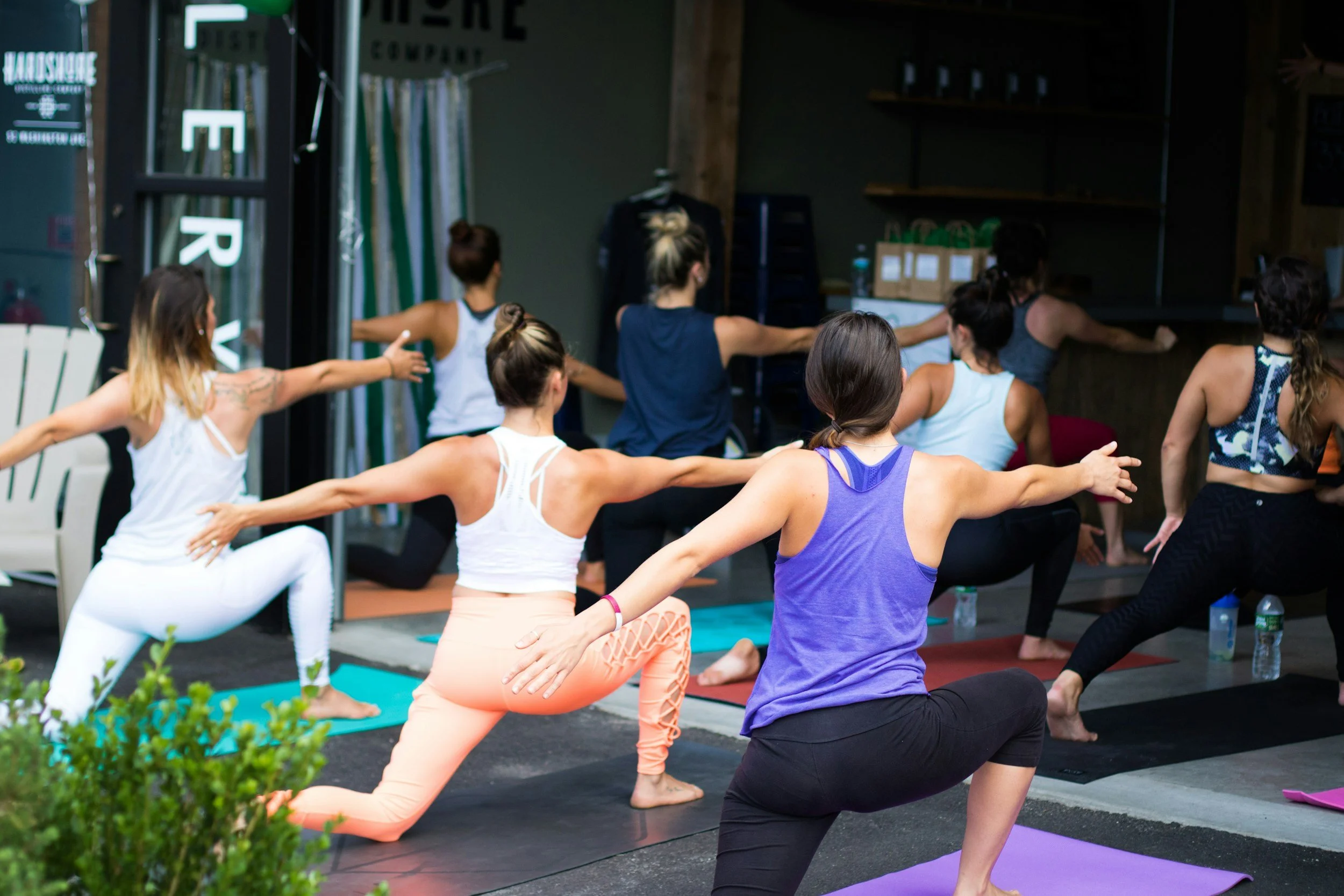
There is a quiet irony in the way yoga has travelled.
Born in ancient forests and philosophical dialogues, it now lives between lattes and brunch. It is packed in branded tights, heated into oblivion, and marketed as stretching.
Beneath the scented candles and polished studio floors, TRUE yoga remains what it has always been: a system for regulating the human experience. Unfortunately, the average studio yoga teacher doesn’t realise the depths of this system’s benefits.
If you are desk-bound often with a neck that feels like steel and trapezius muscles sitting permanently around your earlobes, this is for you.
Because Yoga was never just an exercise, it is an instruction manual for the meat suit. At its core, it is about how to listen to it.
Where Yoga Actually Comes From
The roots of yoga stretch back over tens of thousands of years to ancient India. The Rigveda holds some of the earliest written evidence of yoga practices. These were philosophically refined in the Upanishads. Before that, the practice was passed down like the folktales of old. From Master to Understudy.
The system most referenced in modern yoga comes from the Yoga Sutras of Patanjali, compiled somewhere between 200 BCE and 400 CE. Patanjali did not describe yoga as stretching. He described it as a method for calming mental fluctuations.
Postures in traditional yoga, called asanas or yogasanas, were not originally considered exercises. Historically, yogasanas were used for intentional energetic movement and manipulation around the body (physical, thinking, emotional & energetic).
Reminds me of an anime character. Or a fantasy character. Or any fictional character with powers. Hmm…
How do you become a super cool energy-wielding yogi, like Aang?
Through practising self-awareness, acute self-control and tuning a balanced relationship between the body and the mind.
There’s a little more to it, but we will get there.
For now, we will focus on the mind and the physical. We have to start somewhere.
The science of yoga is known as Hatha, which is the sun and the moon balanced. A relationship of duality and balance between yin and yang. Dark and light. Loving, accepting and harnessing both equally. There are 84 basic yogasanas - systems in traditional yoga.
Begin Here: https://isha.sadhguru.org/yoga/yoga-articles-hatha-yoga-asanas/asanas-guide/
When introduced into Western society, these traditions evolved to suit the increasing demand of the modern world. In other words, we lost touch with elevating one’s relationship with their body and practising consciousness.
The Western Remix
Fast forward to the 20th century. As yoga migrated to Europe, North America and eventually Australia, the physical aspect became foregrounded. Teachers such as B.K.S. Iyengar and Pattabhi Jois helped popularise structured physical sequences, which later evolved into modern styles like Vinyasa, Bikram Yoga and Pilates.
It has now been reduced to something efficient and marketable:
Burn calories
Stretch and improve flexibility
Reduce stress
Socialising
There is nothing wrong with evolution!
Physical practice is valuable – that’s how I started.
But let’s continue the evolution and refocus on the ingredients aiding toward a better world and life experience!
For professionals who spend 7+ hours a day sitting at a screen, the ingredients that matter most -
breathing techniques,
invoking a meditative state (we’ll talk about this in a later article),
regulating the system (all of it - hormones, circulation, digestion, reproductive, energetic, reactivity, reflexes, etc.),
listening and taking action on what you require to avoid chronic ailments and medical issues,
control of your mental chatter,
to name a few…
– are not even available.
If you are looking to change how you experience your reality, where or what you are in life or want to make life simpler, THIS IS WHAT WE ARE MISSING. Back to the basics…
Desk work does not just tighten muscles – it alters breathing patterns.
When you concentrate, you clench muscles and hold your breath.
When you feel pressured for answers, your breathing becomes shallow.
When deadlines stack up, you live in subtle respiratory restriction.
When your posture is slouched, your lungs do not fill as much.
We are starving our bodies of oxygen - no wonder we burn out. Our brain has had enough of us (our actions, at least).
Over time, this reinforces a low-grade stress response that keeps your neck, chest and trapezius muscles in a constant state of readiness. We are ready to run or fight.
Yoga begins by training you to breathe. Breathing enables:
Efficient response to stimuli
Regulating muscular tension and movements (avoiding future pains & injuries & rectifying past ones)
Focus our mentality for our benefit and the life we desire
Eliminating unconscious reactions (choices that are not in our best interest)
Providing the emotional capacity to hold less anger towards ourselves
The Science is Catching Up
Modern research is now supporting what practitioners have experienced for centuries. Regular yoga practice has been shown to:
Reduce perceived stress and cortisol levels
Improve heart rate variability (a measure of nervous system resilience)
Decrease symptoms of anxiety and depression
Improve sleep quality
Reduce chronic musculoskeletal pain, particularly in the neck and lower back
While movement contributes to these outcomes, breath-focused practice appears to amplify the results.
Slow, diaphragmatic breathing stimulates the vagus nerve, shifting the body from sympathetic dominance (fight-or-flight) into parasympathetic regulation (rest-and-digest). This shift reduces unconscious muscular bracing – particularly in the shoulders and upper back.
Let’s Talk About Your Pain
Prolonged computer use shortens the pectoral muscles, weakens deep neck flexors and activates the upper trapezius. The result is forward head posture, rounded shoulders and persistent tension headaches.
The upper trapezius muscle elevates the shoulders. Under stress – psychological or physical – it contracts. When you sit at a computer concentrating, especially under deadlines, you unconsciously lift and hold your shoulders.
You may also clench your jaw, which leads to other tension problems.
Posture, however, is only half the story. If the nervous system remains in vigilance mode, after you return home, cook dinner, do chores, or even sit on the couch, muscles will continue to tighten no matter how much you stretch them.
Traditional Yoga interrupts that pattern in two essential ways: through conscious movement and through conscious breathing.
Consciousness teaches you what to look for and how to notice.
Movement rebalances muscular engagement, in turn, skeletal posture.
Breathing reduces the underlying stress signal and tells those muscles to switch off. It redirects mental focus intentionally. In other words, it gives you back control.

CONSCIOUS
What really happens through this practice is that you begin to notice when you are unconsciously doing anything, such as tensing. This is where the real therapy begins. The movement and breathing allow the muscles, fascia, and blood to circulate and relax the body.
Our StoryI began practising daily yoga a decade ago to address chronic tension, and my clinical diagnosis of “suffering from migraines” due to unknown causes. What I did not expect was the eventual abolishment of my depression.
The emotional regulation practice I cultivated from allowing my body to be still and feel where the tension was held enabled conscious release. In turn, identifying conscious release of emotional holds as well. Another way of saying this is that I can THINK MY WAY THROUGH A FEELING. I can choose how I want to feel at any given moment. This is why all those monks look so damn happy all the time. It’s not because they have “a life without distraction” - it’s because they can consciously decide and alter their experience.
But! I didn’t want to be a monk.
I won’t sugarcoat it for you. It was and continues to be difficult. Like an instrument, if you stop playing, eventually you’ll forget how to play. So it is an ongoing practice. But it is worth it.
I can testify that after my diagnosis when I was 9, the only thing that helped (including the daily medication I was put on) was a daily practice of yoga. That’s 11 years I suffered - searching for anything that would aid this constant pain and fear.
Now, 10 years after I began yoga, going only 2 weeks without my practice, I feel a significant change in my energy, emotions, thoughts and body tension. The noticing doesn’t go away but the deregulation comes back.
We Have No Time: A Dilemma
You are busy.
Meetings. Deadlines. Clients. Children. Chores. Exhaustion. Sleep. Eating.
The idea of a 90-minute class, frankly, doesn’t appeal.
Not to me anyway - even after 10 years! So I certainly don’t blame you!
So, let’s find this balance we keep talking about, yes?
The quality of yoga in the Westernised/Modern Yoga practices is fleeting. There is not enough “how” or “internal focus points” because they are too concerned with the “flow” of the movement and positioning. Not the quality of focus. It’s honestly too fast or too complicated – almost like they’re trying to distract your mind instead of training and harnessing it. Depending on the class, it can be super boring.
How do you focus your mind?
Each yogasana is a position to achieve a particular energetic movement and circulation in the body. It is, focusing on the stretch or the pain. What this does is consciously focus the brain (our control centre) on a specific area that needs attention. Think, ‘one thing at a time, and I’m going to start by focusing here.’
I’m not saying push through your knee injury. That’s silly.
BUT, don’t assume you can’t because of that injury!
It’s also listening. A relationship with your best friend that you want to keep forever. Slight adjustments, negotiations and compromises will maintain the relationship for the greater good.
The greater good.
Breathing through that movement, into the “shake” (called Prana, the body’s energy) and stretch allows oxygen flow to the targeted area. You are providing your body with more quality oxygen. You are counting the length of your breath to keep your mind focused on the task, but distracted enough to get through it. Like doing reps at the gym, the counting can help focus. Greater blood flow to the stretched or tensed area enables muscle release or building.
Modern Traditional Yoga Cheats
Consistency & Quality Over Length
1
Commit to a minimum of 5-10 minutes every day to practice yoga, meditation or breathing. (If you haven’t figured out by now, these are all yoga.) Consistency and QUALITY matter more than duration. Have an average goal of 15-20 minutes (you decide), and if that isn’t achievable, have a minimum goal of say 5 minutes.
Macro & Micro Cycles
2
Variety is the spice of life and is important for a healthy system. A micro-cycle in physical education is the variety of an exercise regime over the span of a week for the goal you are seeking. A macro-cycle is the big picture of those weeks over the span of a month, a year or more.
Undertake yoga practices once per day that feel right and in ALIGNMENT with your body for that time and day. Not what you think it should be. Ensure a balance between strength and effort and rest and recovery.
Listening Practice
3
Cultivate a listening relationship with your body (and mind, we will talk further). Enable yourself to rest. Allow yourself to take the easier yoga pose modification and not judge yourself. Try the harder yoga when you feel called. Get to know your own system and its needs. This is imperative to an efficient practice under time constraints.
How do you start listening? Start by closing your eyes and paying attention to where it is painful or tight. Undertake the monthly challenge breathing technique on the landing page. What is the first thought that pops into your head that is what you need for this pain? Act accordingly.
Workplace Quicky
4
Before the meeting. Struggling after that frustrating call or email. Book yourself a meeting room or leave the workplace for 5 minutes (smokers do it guilt-free) and do some yoga. No one cares. Your productivity will increase and remain optimal as your stress levels reduce. Be honest, if questioned, perhaps they might try it as well.
Simple & Targeted Yoga
5
While sitting, standing, or I suppose lying down, do some simple yoga poses, breathing, focus exercises or visualisation just to loosen and realign with your body. I would get up every 20-40 minutes to stand and stretch. If I wasn’t too busy, a walk to get water or a tea. Or simply, stand up, stretch, 3 deep breaths and sit back down.
-
Lin, S-L. et al. (2015). Effects of Yoga on Stress and Heart Rate Variability. Worldviews on Evidence-Based Nursing.
Pascoe, M. et al. (2017). Yoga and Stress-Related Physiological Measures: A Meta-Analysis. Psychoneuroendocrinology.
Chu, I-H. et al. (2017). Yoga, HRV and Depressive Symptoms in Women. Journal of Alternative and Complementary Medicine.
Iyengar, B.K.S. Light on Yoga.
Patanjali. The Yoga Sutras.